
August 19, 2026
AI Can Build the Software. But Can It Make It Work With Your Equipment?
AI Can Build the Software. But Can It Make It Work With Your Equipment?
AI is changing how software gets built. Developers can now use AI to generate code, create interfaces, build APIs, write tests, troubleshoot problems, and move through development work far faster than was possible just a few years ago.
For many business applications, that is a major advantage. But there is a point where relying on AI alone starts to show its limitations: when the software has to interact with equipment in the real world.
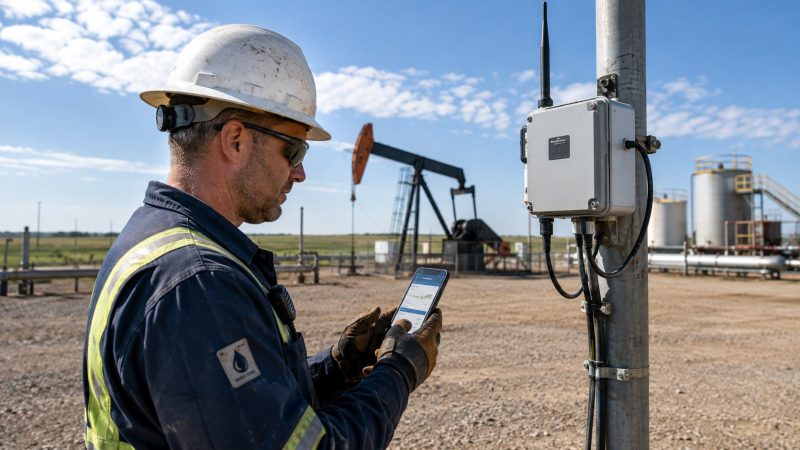
A system might need to communicate with a sensor in the field, pull information from a truck, control a piece of industrial equipment, read data from a scale, communicate with a PLC, or exchange information with a proprietary device that has been operating for decades. In those situations, generating good code is only part of the job. The software also has to work reliably with the equipment, and that is where human engineering experience still matters.
AI Is Making Software Development Faster
We use AI extensively in our own development process at Flint Hills Group. It can help our developers write and review code, investigate bugs, build prototypes, generate tests, understand unfamiliar parts of a codebase, and accelerate many of the repetitive tasks involved in building a modern software system.
That means our developers can spend less time manually producing routine code and more time solving the problems that actually require engineering judgment. For our clients, that can translate into faster development and lower overall development costs.
The distinction becomes important when hardware enters the picture. AI is extremely good at working with information that exists digitally, but hardware operates in the physical world, where conditions are often less predictable than the code surrounding them.
The Challenge Starts When Software Meets Hardware
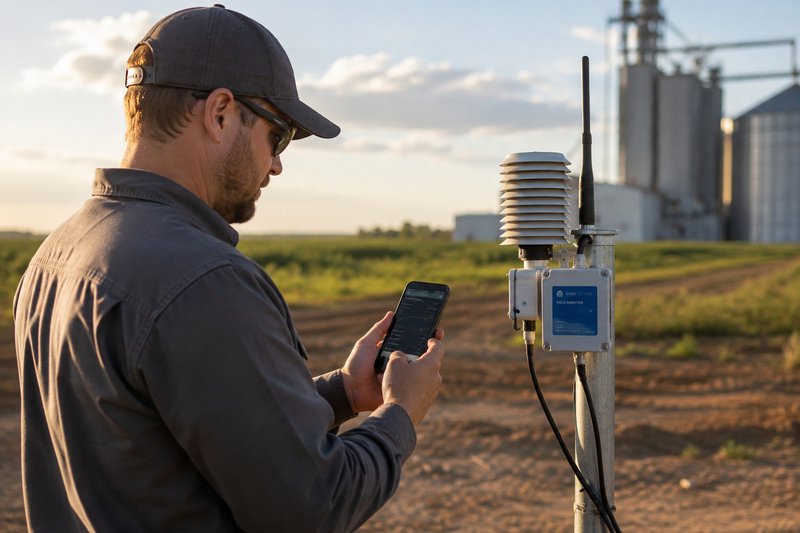
Imagine you are building a new software platform for your business. The application itself may include a web interface, database, user accounts, reporting, mobile functionality, and integrations with other software systems. AI can help accelerate nearly all of that work.
Then the application needs to communicate with a piece of equipment at your facility, and the nature of the project changes.
The development team now has to understand how the equipment communicates, what protocol it uses, whether an API exists, and whether the manufacturer’s documentation accurately reflects how the device behaves. They also have to account for what happens when the device loses its network connection, sends unexpected data, or behaves differently depending on its operating state.
When something goes wrong, the cause may not even be obvious. The problem could be in the application, the network, the firmware, the device configuration, or the hardware itself.
AI can help developers investigate those possibilities and generate code to address them. But sometimes the only way to know what is actually happening is to connect to the equipment, observe its behavior, test different scenarios, and work through the problem using engineering judgment.
Real Equipment Does Not Always Behave Like the Documentation
One of the biggest differences between normal application development and hardware integration is that developers cannot always assume the real-world system will behave exactly as expected.
Documentation may be incomplete, a device may be running an older firmware version, or two pieces of equipment that are supposedly identical may behave differently. A manufacturer may use a proprietary communication protocol, and older equipment may have little useful documentation available at all.
There may also be years of modifications, workarounds, configuration changes, and tribal knowledge surrounding the equipment. What exists in the field may be very different from the clean example described in a manual.
AI can help an experienced developer understand documentation, investigate protocols, generate integration code, or identify possible causes of a problem. What it cannot do on its own is determine whether those assumptions match what the equipment is actually doing in your operation.
That often requires testing against the physical system.
The Real World Creates Edge Cases AI Cannot See
Traditional business software often operates in a relatively controlled environment. Hardware-connected software may have to account for conditions that are much harder to predict.
A truck may lose cellular coverage, a sensor may start sending incorrect readings, a controller may restart unexpectedly, or a device may stop responding in the middle of a transaction. A machine may need to continue operating while the network is unavailable, or an employee may use the equipment in a way nobody anticipated during development.
The software still has to know what to do in those situations. Should it retry the connection, store data locally, alert someone, continue operating, or stop? What happens when the connection returns? How should incomplete or conflicting information be handled?
Those decisions depend on more than code. They require an understanding of how the business operates and what the consequences of a failure could be.
For industrial companies, that distinction matters because a software failure may affect more than a screen in an office. It could interrupt an operational workflow, create inaccurate data, delay production, or prevent employees from using critical equipment.

This Is Where Human Expertise and AI Work Best Together
We do not view AI as something separate from software development. It is increasingly part of software development, and we use it to move faster, explore solutions, automate repetitive work, and shorten the time it takes to get from an idea to working software.
But AI is still a tool. The value of an experienced software engineer is increasingly in knowing what problem needs to be solved, what assumptions need to be tested, and whether the solution actually works in the real world.
That becomes especially important when software touches hardware. An experienced developer can use AI to generate an integration faster, then connect it to the actual equipment, observe what happens, diagnose unexpected behavior, adjust the architecture, test failure conditions, and determine whether the entire system is dependable enough for day-to-day operations.
AI provides speed. Engineering experience provides judgment.
The real advantage comes from combining the two.
Bridging the Last Mile Between Software and the Physical World
AI may be able to build a surprising amount of your application, but there is often a last mile between software that looks complete and a system that works reliably inside your operation.
For companies in agriculture, transportation, oil and gas, manufacturing, and other industries that depend on physical equipment, that last mile can be one of the most important parts of the project. It is also where experienced software developers provide some of their greatest value.
At Flint Hills Group, we use AI throughout the development process while bringing the engineering experience necessary to connect modern software with the equipment our clients depend on. The goal is not to choose between AI development and traditional software engineering. It is to combine the speed AI provides with the human expertise required to solve the parts of the project that exist beyond the code.
That is how you get software that is not only built faster, but actually works where it matters most: in the real world.

Kaylee Blubaugh
Software Project Manager / Head of Marketing
Kaylee combines her background in marketing, team leadership, and technology to help create thoughtful, valuable products and digital experiences. With 15 years of marketing experience, she brings a strategic perspective to both software development and brand communication.
Kaylee Blubaugh
Software Project Manager / Head of Marketing
Kaylee combines her background in marketing, team leadership, and technology to help create thoughtful, valuable products and digital experiences. With 15 years of marketing experience, she brings a strategic perspective to both software development and brand communication.
